
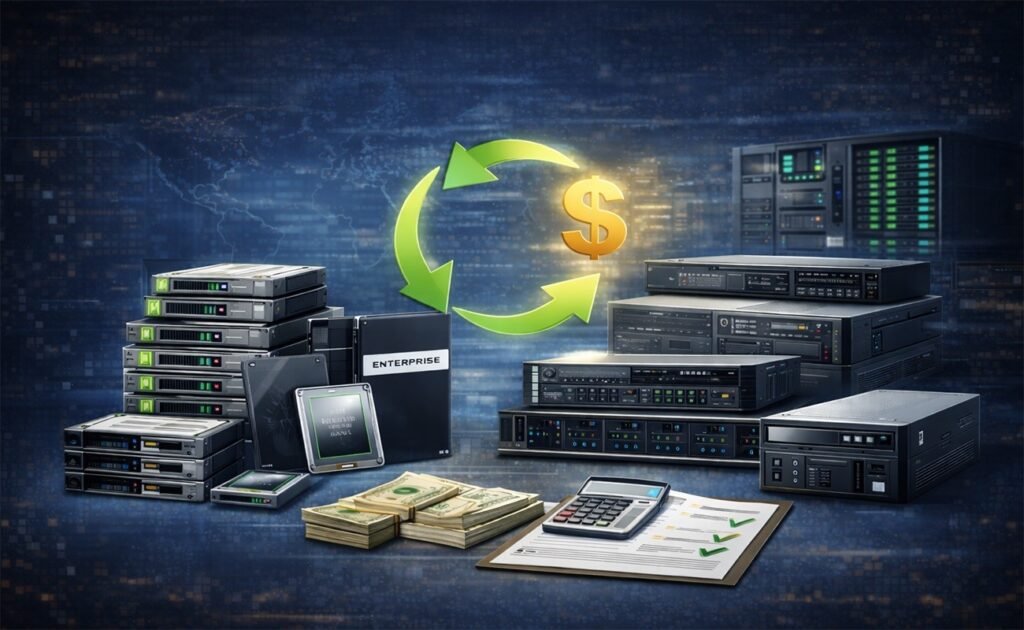
In today’s world of fast-moving technology, storage devices—hard drives, SSDs, tape libraries, SAN/NAS units, and enterprise arrays—are replaced more often than ever before. Businesses continuously migrate to higher-capacity, faster, and more energy-efficient systems. Yet despite this rapid evolution, old storage devices still maintain strong resale value in both regional and global markets.
At first glance, this seems surprising. Why would organizations or buyers pay for hardware that is “outdated,” slower, or not part of the latest product generation? Shouldn’t old devices be considered obsolete?
The answer is no—and the reasons are far more strategic and economic than most people realize.
Old equipment plays a critical role in multiple industries, especially in regions like the Middle East, Asia, Eastern Europe, Africa, South America, and even secondary markets in Europe and North America. Businesses continue to purchase used or refurbished devices for:
-
Cost reduction
-
Legacy system support
-
Spare parts availability
-
Regulatory compliance
-
Backup and archiving
-
Lab testing environments
-
Expansions without redesigning existing infrastructure
-
Data migration processes
-
Disaster recovery planning
That demand gives older units genuine monetary value, which creates a business opportunity for companies and individuals who want to sell used systems profitably.
In this mega-guide, we will explore in depth why old devices still have resale value, the markets that buy them, what determines their price, and how sellers can maximize profits from old hardware.
1. Understanding the Lifecycle of Storage Devices
To understand why older hardware retains value, you must understand how long these devices are actually usable. The “lifecycle” of technology includes:
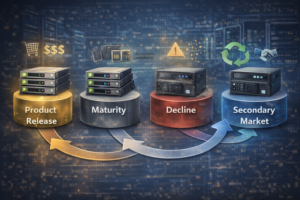
A. Product Release Phase
This is when the device first enters the market:
-
High demand
-
High pricing
-
Typically purchased by enterprises and data centers
-
Long-term support guaranteed
B. Maturity Phase
Hardware becomes widely adopted:
-
Prices drop slightly
-
Spare parts become cheaper
-
Firmware is stable
-
Ideal for large-scale deployments
C. Decline Phase
Newer generations replace the older model:
-
Manufacturers reduce marketing
-
Support may be limited
-
Businesses begin decommissioning older units
D. Secondary Market Phase
This is the crucial stage where resale becomes important:
-
Devices still function perfectly
-
Buyers look for cheaper alternatives
-
Many organizations rely on older systems
-
Refurbishes provide warranty and support
The secondary market phase is where old equipment gains significant resale demand.
2. Why Old Storage Devices Maintain Strong Resale Value
There isn’t one simple reason—there are many. Below are the most important ones.
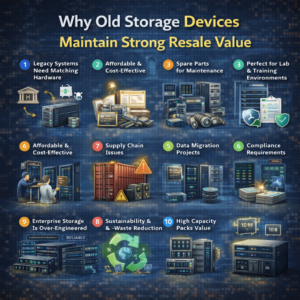
Reason #1: Legacy Systems Still Need Matching Hardware
Companies that run legacy infrastructure—manufacturing plants, banks, telecom operators, government systems, hospitals, and aviation systems—often cannot upgrade easily.
Why?
-
Their applications only run on specific platforms.
-
Upgrading disrupts critical services.
-
New systems may not be compatible with old software.
-
Migration may cost millions.
So, they continue buying older = devices that match their environment.
Example Use Cases
-
A bank running a core banking system from 2013
-
A telecom company using arrays tied to old firmware
-
A hospital relying on legacy imaging systems
These organizations actively search for older units, which creates consistent resale demand.
Reason #2: Old Storage Is Affordable and Cost-Effective
Many businesses—especially small and medium enterprises—don’t need the highest-performance systems. For them:
-
Low-cost matters more than cutting-edge performance
-
Older devices provide enough speed and capacity
-
Refurbished hardware can be 40%–80% cheaper
Because of this, older devices remain valuable simply because they are budget-friendly solutions for many organizations.
Reason #3: They Provide Spare Parts for Maintenance
Even if an old device is no longer used for production, it still has value as a source of spare parts.
Companies buy old hardware to harvest:
-
Controllers
-
Drive trays
-
RAID cards
-
Power supplies
-
Backplane components
-
Fans
-
Connectors
-
Enclosures
These components help maintain existing production systems without forcing expensive upgrades.
Reason #4: Perfect for Lab, Testing, and Training Environments
IT teams use old devices for:
-
Internal testing
-
Experimenting with new configurations
-
Training junior engineers
-
Learning vendor ecosystems
-
Non-critical development environments
Buying used equipment instead of new saves substantial cost.
Reason #5: Data Migration Projects Create Demand
When a company migrates data from old systems to new ones, they often need:
-
Temporary replacement units
-
Compatible hardware
-
Matching controllers
-
Additional drives for data staging
Thus, even devices that are 10–12 years old can have resale value simply because they aid the migration process.
Reason #6: Some Industries Require Old Hardware for Compliance
Regulated industries—banking, medical, aviation, government—sometimes cannot upgrade quickly due to:
-
Compliance rules
-
Approval cycles
-
Vendor certifications
-
Legally required retention of historical data
These industries rely on older devices, increasing demand in the secondary market.
Reason #7: Global Supply Chain Issues Increase Secondhand Value
Since 2020, supply chain issues have caused:
-
Shortages of new chips
-
Delayed production
-
High shipping costs
-
Long lead times
As a result, many companies began buying used or refurbished equipment to avoid downtime—boosting resale prices.
Reason #8: Sustainability and E-Waste Reduction Programs
Green IT initiatives encourage:
-
Recycling
-
Reuse
-
Refurbishment
-
Reducing carbon footprint
Buying used hardware supports these goals and reduces e-waste. Many companies now prefer refurbished units as part of sustainability commitments.
Reason #9: Enterprise Storage Is Over-Engineered and Long-Lasting
Enterprise systems are built to last:
-
Redundant components
-
Hot-swappable drives
-
Industrial-grade materials
-
Strong cooling systems
-
Reliable firmware
This long lifespan means older units still work perfectly—even after a decade.
Reason #10: High Capacity = High Value (Even When Old)
Capacity is always valuable, regardless of age.
Even if:
-
speeds are lower
-
interfaces are older
The sheer amount of data that can be stored still holds value.
For example:
-
Old 10TB drives are still useful for backup
-
Older SAN/NAS units still serve as archive
-
Tape libraries continue to be used for long-term retention
Large capacity always attracts buyers.
3. Who Buys Old Storage Devices?
Understanding buyers is key to understanding resale value.
A. Small & Medium Enterprises (SMEs)
-
Need affordable
-
Don’t require cutting-edge performance
-
Buy refurbished or used devices
B. Data Centers (for parts & expansions)
-
Use older devices for spare parts
-
Expand older infrastructure while planning upgrades
C. IT System Integrators
-
Need matching parts for client projects
-
Buy used equipment for temporary deployments
D. Refurbishes & Resellers
-
Buy in bulk
-
Repair and test
-
Resell with warranty
E. Government and Public Sector
-
Often maintain long-term systems
-
Procurement cycles are slow
-
Prefer stable legacy systems
F. International Buyers in Emerging Markets
There is especially strong demand from:
-
Africa
-
India
-
Pakistan
-
Middle East
-
Southeast Asia
-
South America
These regions actively buy used hardware due to budget considerations.
4. What Types of Old Storage Devices Have the Highest Resale Value?
Different types of equipment hold value differently.
A. Enterprise SAN & NAS Systems
High-resale value items include:
-
Modular SAN systems
-
Rackmount NAS units
-
iSCSI
-
Fiber Channel arrays
Capacity and condition matter most.
B. Hard Drives and SSDs
Yes—individual drives still hold great value, especially:
-
Enterprise SAS drives
-
NVMe drives
-
High-capacity SATA drives
-
SSDs with good health remaining
Even 8–10-year-old enterprise drives sell well.
C. Tape Drives & Tape Libraries
Many industries still rely on tape due to low cost and high reliability.
Tape backup systems have a surprisingly strong secondhand market.
D. Storage Controllers & RAID Cards
Controllers often sell for high prices because:
-
They are critical for functionality
-
Failures are common
-
Manufacturers stop producing them
-
Companies need exact model replacements
E. Storage Enclosures & Shelves
Drive shelves and expansion units always sell because they allow companies to expand existing infrastructures without replacing the entire system.
5. What Determines the Price of Old Storage Devices?
Resale value depends on several factors:
1. Age of the Device
Newer units = higher price
Older units = still valuable but lower demand
2. Brand
Enterprise brands maintain higher resale value.
3. Condition
Fully working devices sell for more.
Units with missing components sell cheaper.
4. Capacity
Higher capacity = higher demand.
5. Market Demand
If companies are still using that model series, resale value increases.
6. Rarity
When OEMs stop production, older controllers and parts become valuable.
7. Warranty from the Seller
Refurbishes who offer warranty can sell for 20–40% more.
8. Remaining Drive Health (SSDs/HDDs)
Drives with low wear and good health reports sell at premium prices.
6. Why Businesses Should Consider Selling Old Storage Hardware
If you have old storage equipment, don’t throw it away—it’s worth real money.
Selling old devices helps:
-
Recover capital
-
Reduce e-waste
-
Increase sustainability
-
Free up data center space
-
Reduce maintenance cost
-
Generate quick cash flow
Companies often buy back old systems for refurbishment or recycling.
7. How to Maximize the Resale Value of Old Storage Devices
To get the highest price:
A. Properly Clean & Test the Hardware
Buyers pay more for:
-
Tested devices
-
Cleaned units
-
Devices with test reports
B. Provide Accurate Specifications
Include:
-
Model numbers
-
Storage capacity
-
Firmware version
-
Interface type
-
Drive health reports
C. Sell in Bulk When Possible
Bulk lots often earn higher total payout.
D. Work with Authorized IT Recyclers or Refurbishes
They offer:
-
Higher buyback prices
-
Free collection
-
Data wiping services
E. Ensure Professional Data Erasure
Certified data wiping improves trust and increases resale value.
8. The Future of Old Storage Devices in the Secondary Market
The resale market for old storage devices is growing due to:
-
Rapid upgrades in AI and cloud computing
-
More businesses seeking affordable hardware
-
Global economic pressures
-
Sustainability initiatives
The secondary market today is more active than ever.
Even as storage technology improves, old hardware continues to play a crucial role in many environments.
Conclusion: Old Storage Devices Still Hold Strong Value
Old storage devices retain resale value because:
-
They support legacy systems
-
They’re cost-effective
-
They’re needed for parts
-
They’re used in testing labs
-
They help with migration
-
They comply with industry regulations
-
They offer high capacity at low cost
-
They’re essential for organizations worldwide
Whether you’re a business, an IT manager, a data center operator, or a reseller, understanding the value of old storage equipment can help you recover costs and support sustainable operations.